
Ethical Eating in the City: Choices, Sustainability and Science
Imagining grocery shopping in a large city under strict ethical filters may seem utopian. Being vegetarian is no longer enough; the challenge is to find food that respects deeper principles: no animal products unless they meet exceptionally strict cruelty-free guarantees, rejection of ultra-processed foods, and obsessive attention to environmental footprint and packaging. What remains in the shopping cart of someone pursuing this radical consistency? Less than one might think, but still enough for a rich and mindful meal.
The Power of No / The Boundaries of Consumption – The List of Non-Choices
- Meat, Fish and Derivatives The starting point. Being vegetarian is the foundation. This choice rules out entire categories from the outset, pushing the diet toward exclusively plant-based protein sources
- Milk and Eggs – Beyond Organic, Toward Cruelty-Free This is where things become more complex. “Barn-raised” or “organic” is often not enough. Conventional milk production almost always involves the early separation of calves from their mothers, which is considered unacceptable here. With eggs, guaranteeing welfare standards that go beyond the legal minimum is so difficult that it often leads to giving them up entirely. The choice is not simply about “organic” food, but about moving away from the cruelties inherent in the industrial system
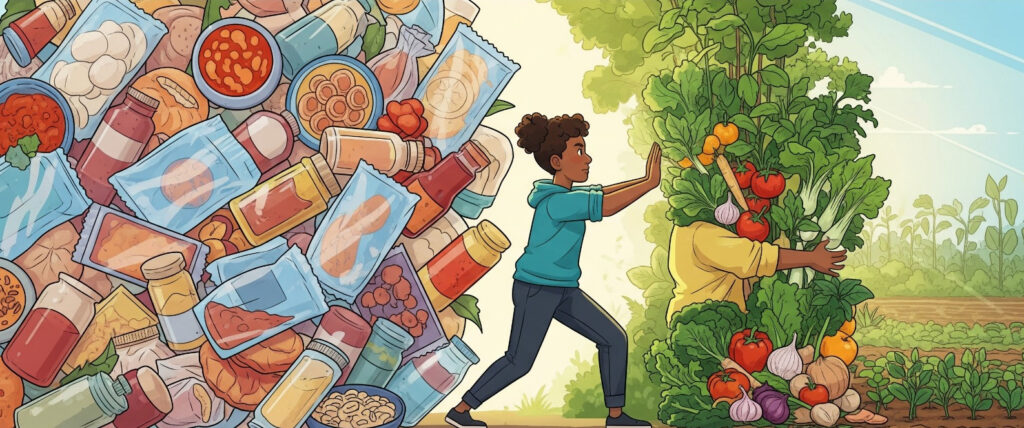
- Processed Food and Reassembled Foods Transparency and Environmental Impact. Ready meals, packaged sauces and pre-cooked frozen foods are avoided because of the lack of transparency about ingredients and industrial processes, as well as excessive single-use packaging. Home cooking becomes an act of resistance
The Hidden Footprint: Environment and Packaging
Every purchase is a vote. Preference goes to products with the lowest environmental impact, choosing loose goods or reusable/recyclable packaging. Attention shifts from price to ecological footprint
Beyond the Surface: The Impact of Plant Domestication
Ethical reflection does not stop with animals. The plant world also hides complexities. The varieties of fruit, vegetables and grains we eat are the result of thousands of years of domestication and intensive selection, which has favored yield and appearance at the expense of biodiversity and natural resilience.
How “natural” is what we eat if it has been shaped so extensively by humans for industrial convenience? What is the impact of monocultures on the soil? And how many plant varieties have been lost? The pursuit of ethical food therefore extends to recovering rare, ancient and authentic varieties: a difficult but rewarding commitment
Resources, Strategies and Practices
- Legumes and Whole Grains The foundation of this diet. Easily found loose or with minimal packaging, they provide nutritional variety with a very low environmental impact
Local and Seasonal Fruit and Vegetables Farmers’ markets, neighborhood markets and GAS (Italian solidarity purchasing groups) are valuable urban options for freshness, seasonality and reduced transport
Self-Production and Mindful Cooking Returning to the kitchen is the definitive answer to pre-processed food. Preparing food at home provides almost total control over ingredients and reduces packaging waste
Specialist Shops Specialized organic shops are important resources for certified products or ethical alternatives, even if they cost more
The Future on the Plate: Alternatives from Science
- Scientific research offers new perspectives for ethical eating
Pure Plant Proteins Legumes, soy, peas and lupins remain excellent protein sources
Microalgae and Mycoproteins Innovative sources such as spirulina, chlorella and fungal mycoproteins are nutritious and have a low impact
Precision Fermentation This developing technology makes it possible to produce complex foods using microorganisms without direct animal exploitation
Promoting Biodiversity Science encourages the rediscovery of legumes, grains and native crops, strengthening local supply chains
Cell-Based Research Italian universities continue research into cultivated meat, ready to propose solutions if regulations permit it
A New Balance Is Possible: Everyday Commitment
Searching for ethical food in the city is a daily commitment, a value-based choice that goes far beyond nutrition. It is an act of responsibility toward animals, the planet and ourselves. It is not about unrealistic perfection, but about making the most conscious and informed choice possible. The shopping cart of this mindful consumer tells a story of commitment, respect and consistency, of inestimable value.