Month: September 2026

“Loudness War” (The Battle for Volume)

Scritto da giux | Pubblicato il 03/09/2026 | 0 commenti

The Loudness War is the trend of compressing audio to make it sound louder, which began in the 1990s. It reduces dynamic range, compromising sound quality. Today, streaming platforms and vinyl are bringing renewed attention to dynamics. Software such as Audacity can measure crest factor, a useful metric for assessing compression in digital tracks.

High Fidelity or Placebo? The Mystery of Frequencies We (Maybe) Can’t Hear

Scritto da giux | Pubblicato il 03/09/2026 | 0 commenti

High-resolution audio goes beyond the CD standard, offering sample rates of up to 192 kHz and 24-bit depth. While some listeners praise its greater naturalness and detail, others question the practical value of frequencies above 20 kHz. Scientific studies and psychoacoustic tests have produced conflicting results, fueling an ongoing debate over perceived quality, the limits of human hearing, and possible technical distortions.

#audio perception #bit depth #DAC #equal-loudness contours #Fletcher-Munson curves #hi-fi #hi-res audio #human hearing #intermodulation distortion #ISO 226 #Nyquist-Shannon theorem #psychoacoustics #sample rate #ultrasonic frequencies

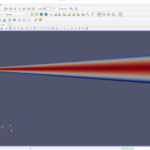
Waveform Viewer di Giux-CalcLab con due pannelli che mostrano le forme d’onda periodiche di un multivibratore astabile discreto.

Laboratory Diary – A Transistor-Based NE555 as a Test for Giux-CalcLab

Scritto da giux | Pubblicato il 03/09/2026 | 0 commenti

GNU Octave? No—this article is about SPICE. The correct translation is:

A circuit inspired by the NE555, built entirely with transistors, resistors, capacitors, and diodes, becomes a test bench for the SPICE simulator I am developing on my server.

#555 timer #astable multivibrator #BJT #circuit simulation #discrete transistor circuits #electronic simulation #Giux-CalcLab #NE555 #ngspice #NPN transistor #PNP transistor #SPICE #SPICE netlist #transient analysis #waveform viewer

LED Theory: Basic Concepts

Scritto da giux | Pubblicato il 03/09/2026 | 0 commenti

An LED is a p-n junction diode that emits light through the recombination of electrons and holes. The color depends on the band gap of the semiconductor material. Current must be controlled, not voltage, to avoid damage…