OpenFOAM 14 Part 2: Building a Mesh with blockMeshDict
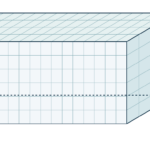
Second part of the OpenFOAM 14 series: a 3D duct from eight vertices, the hex block, cell counts, simple and symmetric grading, boundary patches, blockMesh and checkMesh with expected values.
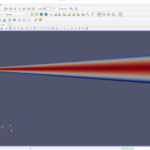
A Python script using the Gmsh API builds the channel from command-line parameters: same logic, different geometries and meshes, validated in OpenFOAM 14 against Poiseuille.
The laminar channel rebuilt with a structured Gmsh mesh imported through gmshToFoam: patches, changeDictionary and a comparison with blockMesh giving identical results.
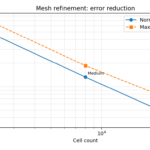
The same laminar channel on three meshes (2,000, 8,000, 32,000 cells): the error against Poiseuille scales with order about 2. How to set up and read a mesh convergence study in OpenFOAM.
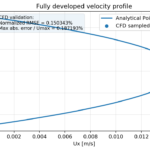
First case of the OpenFOAM 14 path: a laminar parallel-plate channel built from scratch with blockMesh, solved with foamRun and validated against the Poiseuille profile (0.15% error).